There are some smells that instantly mean comfort, and for me, the rich, savory aroma of a slow-braising pot roast is at the top of that list. It’s the scent of a lazy Sunday afternoon, a promise of a meal that warms you from the inside out. But what happens when you take that classic comfort and infuse it with the bold, dynamic flavors of Korea? You get this Korean Style Pot Roast, a dish that has completely redefined what a roast can be in our house. This isn’t just another recipe; it’s a fusion of memories, a bridge between the familiar and the excitingly new. This Gochujang Pot Roast is one of those chef dinner recipes that feels incredibly special but is surprisingly straightforward to make, turning a simple chuck roast into something truly unforgettable.
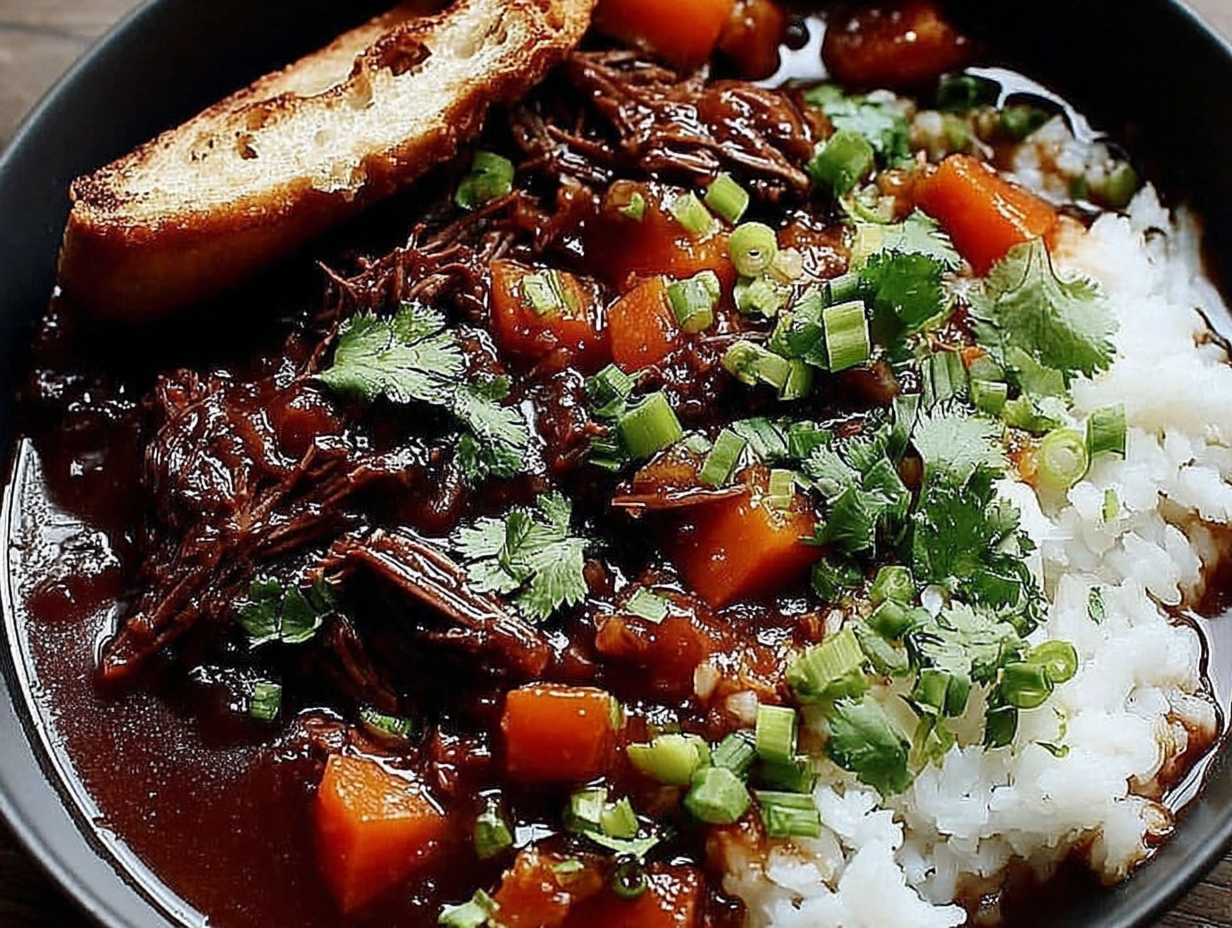
The magic lies in the sauce—a vibrant blend of gochujang, soy, ginger, and garlic that creates a glaze that’s simultaneously spicy, sweet, and deeply savory. As it cooks low and slow for hours, the tough chuck roast transforms, becoming so tender it practically melts. This recipe has become my go-to for so many occasions. It’s one of those perfect dinners for men who appreciate a hearty, meat-based meal, but it’s also elegant enough for a dinner party. If you’ve ever wondered about creative things to do with a chuck roast, this is it. It’s a one-pot wonder that fills your home with an incredible aroma and delivers a meal that feels both nourishing and exciting. It’s the kind of dish that gets requested again and again, and the leftovers are just as spectacular.
Ingredients for Your Korean Style Pot Roast
- 3–4 lbs chuck roast
- 3 carrots, peeled and cut into 1-inch chunks
- 1 large yellow onion, sliced
- 5 garlic cloves, minced
- 1 tablespoon fresh ginger, minced or grated
- 1/4 cup soy sauce (or tamari for gluten-free)
- 2 tablespoons gochujang (Korean chili paste)
- 2 tablespoons brown sugar, packed
- 2 tablespoons rice vinegar
- 1 tablespoon sesame oil
- 1 cup beef broth
- 2 green onions, chopped (for garnish)
- 2 tablespoons chopped cilantro (optional, for garnish)
Step-by-Step Instructions to Make Gochujang Pot Roast
- Prep and Sear the Roast: Start by patting your chuck roast completely dry with paper towels. This is key for getting a great sear! Season it generously on all sides with salt and pepper. Heat a little neutral oil in a large Dutch oven or heavy-bottomed pot over medium-high heat. Carefully place the roast in the pot and sear it on all sides until a deep, brown crust forms. This isn’t a step to rush; that crust is where a ton of flavor comes from. Once browned, remove the roast and set it aside on a plate.
- Sauté the Aromatics: Lower the heat to medium and add the sliced onion to the same pot. Sauté for about 4-5 minutes, until it starts to soften and pick up some of that browned flavor from the bottom of the pot. Next, add the minced garlic and ginger, stirring constantly for about a minute until they’re fragrant. Be careful not to let them burn!
- Build the Flavorful Braising Liquid: Now for the magic. Stir in the gochujang, soy sauce, brown sugar, and rice vinegar. Let this mixture cook for about a minute, stirring it into the onions. This little step helps deepen the flavors. Pour in the beef broth and use a wooden spoon to scrape up any browned bits stuck to the bottom of the pan—this is called deglazing, and it’s pure gold.
- Braise to Tender Perfection: Return the seared chuck roast to the pot, nestling it into the sauce. Scatter the carrot chunks around the roast. Bring the liquid to a gentle simmer, then cover the pot with a tight-fitting lid. Transfer it to a preheated oven at 325°F and let it braise for 3 to 3.5 hours. Your kitchen will start to smell incredible. The roast is done when it’s completely fork-tender and shreds easily.
- Finishing Touches: Carefully remove the pot from the oven. If you like, you can skim any excess fat from the surface of the sauce. Drizzle the sesame oil over the roast. To serve, you can either slice the meat or shred it with two forks right in the pot. Garnish generously with chopped green onions and cilantro. This is one of those meat based dinners that presents beautifully.
- Serve and Enjoy: This Korean Style Pot Roast is amazing served hot over a bed of fluffy steamed rice, creamy mashed potatoes, or even bundled into tacos or wraps for a creative twist on leftovers.
Tips for the Perfect Korean Style Pot Roast
Making a truly great pot roast is all about technique, and a few little details can take your dish from good to absolutely unforgettable. This isn’t just a recipe you follow; it’s a method you learn. For this Gochujang Pot Roast, the balance of flavors and the texture of the meat are paramount. It’s one of those dinner ideas with chuck roast that rewards patience. The low-and-slow cooking process is essential, as it’s what breaks down the tough connective tissues in the chuck roast, transforming it into that succulent, fall-apart texture we all crave. Don’t be tempted to crank up the heat to speed things up; that’s a surefire way to end up with tough, chewy meat. Embrace the slow braise, and you’ll be rewarded with a meal that’s worth every minute of the wait. The goal is to create one of those chef dinner recipes that feels rustic and comforting yet refined in its flavor profile.
Don’t Skip the Sear
I can’t stress this enough: searing the chuck roast before you braise it is the single most important step for developing deep, rich flavor. This process, known as the Maillard reaction, creates a complex, savory crust on the meat that a simple simmer just can’t replicate. Make sure your pot is hot and your roast is dry. A wet roast will steam rather than sear, so pat it down thoroughly with paper towels. Give it time on each side to develop a dark, golden-brown crust. Those browned bits left in the bottom of the pan, called the “fond,” are a treasure trove of flavor that will dissolve into your braising liquid, creating a sauce with incredible depth. Taking an extra 10-15 minutes for this step will pay off immensely in the final dish.
Understanding Gochujang
Gochujang is the heart and soul of this recipe, and it’s important to know that not all brands are created equal. They can vary in sweetness, spiciness, and saltiness. I recommend starting with the 2 tablespoons called for in the recipe, but feel free to taste the sauce before you put the roast in the oven. If you prefer more heat, add another spoonful. If your gochujang is particularly salty, you might want to use low-sodium soy sauce and beef broth to control the final seasoning. The brown sugar and rice vinegar are there to balance the funky, spicy notes of the chili paste, creating a well-rounded and addictive flavor profile. Don’t be afraid to adjust these components slightly to suit your personal taste.
FAQ: Why didn’t my roast get tender?
This is the most common issue when it comes to pot roast! If your roast is tough, it almost always means one of two things: it either hasn’t cooked long enough, or it was cooked at too high a temperature. Chuck roast is a tough cut of meat with a lot of collagen. That collagen needs a low, moist heat environment and plenty of time to break down and turn into gelatin, which is what makes the meat feel tender and juicy. If after 3 hours your roast still feels firm, just put the lid back on and let it cook for another 30-45 minutes. Check it again. Patience is truly the key ingredient.
Substitutions and Variations
One of the best things about a braised dish like this Korean Style Pot Roast is its flexibility. While the core recipe is fantastic as is, you can easily adapt it based on what you have on hand or your dietary preferences. Think of this recipe as a template for deliciousness. It’s one of the most versatile recipes with pot roast meat you can find, and it’s fun to experiment with. Whether you need a gluten-free option or want to load it up with different vegetables, there are plenty of ways to make this dish your own. Exploring these variations is part of the fun of cooking and a great way to discover new flavor combinations you love. It’s a perfect example of how healthy meat dinner recipes can also be incredibly flavorful and adaptable.
- For a Gluten-Free Version: This is an easy swap! Simply substitute the soy sauce with an equal amount of tamari or coconut aminos. You should also double-check the label on your gochujang, as some brands can contain wheat.
- Different Cuts of Meat: While chuck roast is ideal for its marbling and flavor, you could also use a beef brisket (point end) or even bone-in short ribs. For a non-beef option, a pork shoulder (pork butt) would work beautifully with these flavors; just adjust the cooking time as needed.
- Vegetable Additions: Feel free to add other hearty vegetables along with the carrots. Chunks of daikon radish, potatoes, or sweet potatoes would be delicious. For a deeper flavor, you could also add some dried shiitake mushrooms (reconstituted first) to the braising liquid.
- Spice It Up or Tone It Down: If you love heat, add a tablespoon of gochugaru (Korean chili flakes) along with the gochujang, or even a sliced fresh chili. To make it milder for kids or those sensitive to spice, you can reduce the gochujang to one tablespoon and add a tablespoon of miso paste or tomato paste to maintain a savory depth.
FAQ: Can I use a different sweetener?
Absolutely. If you don’t have brown sugar, you can substitute it with an equal amount of honey, maple syrup, or Korean rice syrup (ssal-jocheong) for a more authentic flavor. Each will add a slightly different character to the sauce, but all will provide the necessary sweetness to balance the spicy and salty elements of the dish.
Frequently Asked Questions about Korean Style Pot Roast
Can I make this in a slow cooker?
Yes, this recipe adapts wonderfully to a slow cooker. Follow the first three steps on the stovetop (searing the meat and sautéing the aromatics in a separate pan). This is crucial for flavor. Then, transfer the seared roast, aromatics, and the prepared sauce to your slow cooker. Add the carrots, cover, and cook on low for 7-8 hours or on high for 4-5 hours, until the roast is perfectly tender.
What is the best way to serve this pot roast?
The classic way is to serve it over a bed of fluffy, short-grain rice to soak up all the delicious sauce. It’s also fantastic with creamy mashed potatoes, polenta, or even crispy roasted potatoes. For a lighter option, serve it with a side of steamed greens like bok choy or a crisp, tangy cucumber salad to cut through the richness of the meat.
How do I store and reheat leftovers?
Leftovers are one of the best parts! Store the pot roast and its sauce in an airtight container in the refrigerator for up to 4 days. The flavors will actually meld and become even better overnight. To reheat, gently warm it in a saucepan over medium-low heat until heated through. You can also shred the leftover meat and use it for tacos, sandwiches, or fried rice.
A Meal to Remember
This Korean Style Pot Roast is more than just a meal; it’s an experience. It’s the joy of transforming a humble cut of meat into something truly special, of filling your home with an aroma that is both comforting and intriguing. Every time I make this dish, it feels like a small celebration—a perfect blend of the familiar comfort of a classic pot roast and the exciting, bold flavors of Korean cuisine. It’s a standout among meat based dinners and a recipe I am so excited to share. I hope you and your family love this Gochujang Pot Roast as much as mine does. It’s a keeper, a dish that will surely earn a permanent spot in your recipe rotation.