There’s something uniquely special about the hibachi experience, isn’t there? It’s not just about the food; it’s the sizzle of steak hitting the hot griddle, the flash of a chef’s knife, and the shared excitement around a communal table. For years, I thought that kind of magic was reserved for expensive nights out at places like Benihana. I craved that specific flavor—the tender, savory steak, the crisp-tender veggies, and that drizzle of creamy sauce. That craving is exactly what led me to create these Hibachi Steak Bowls, a recipe that brings all that restaurant-style excitement right into your own kitchen. This isn’t just another stir-fry; it’s a complete, soul-satisfying meal that tastes just like the real deal.
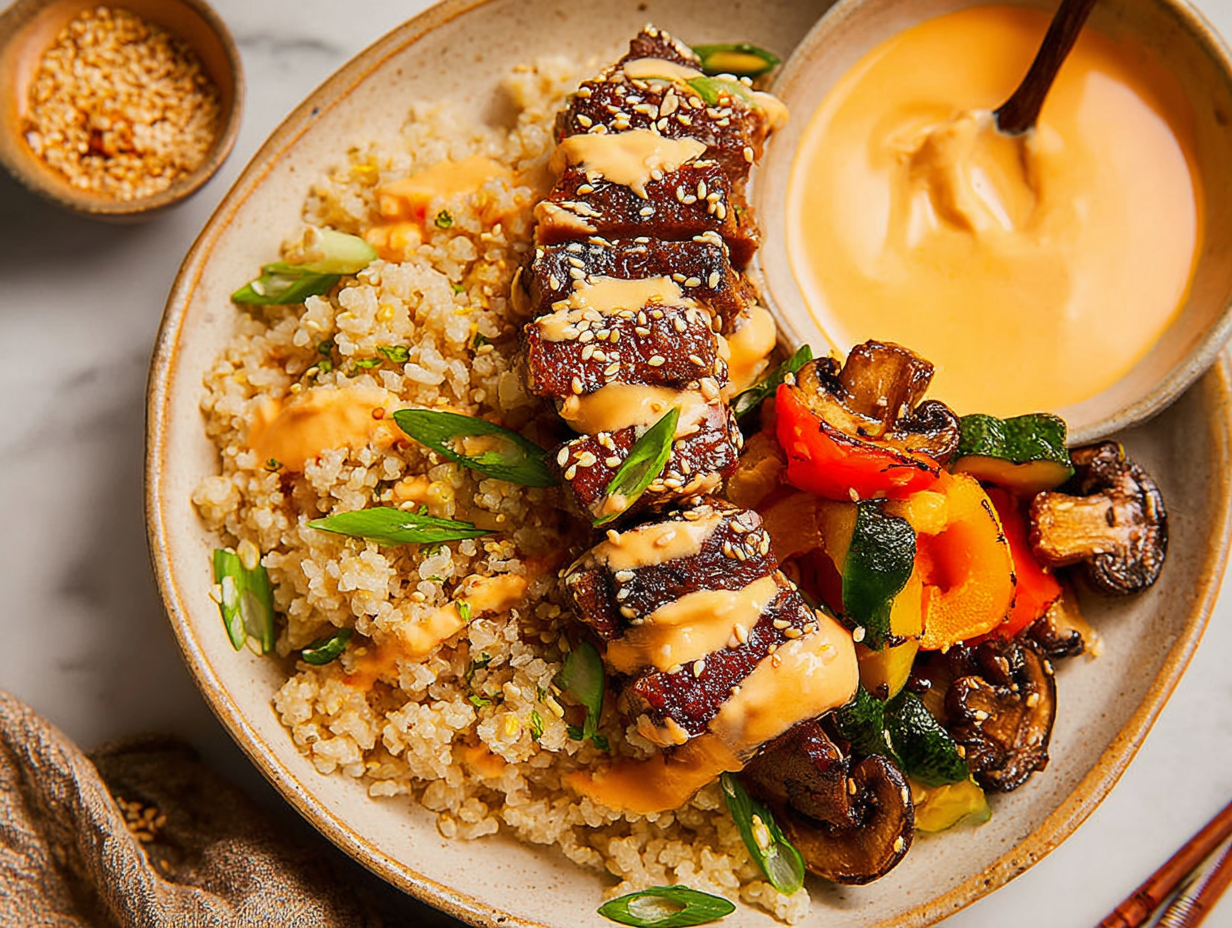
What I discovered is that you don’t need a giant flat-top grill or a culinary degree to master this dish. The secret is in the simple, high-quality ingredients and the technique. This Steak Hibachi Bowl is one of my go-to easy dinner ideas beef because it comes together so quickly, making it perfect for a busy weeknight. Yet, it feels impressive enough to serve to guests. We’re talking juicy, marinated sirloin steak bites, a colorful mix of sautéed vegetables, and fluffy fried rice, all piled high and ready to be devoured. It’s a complete Hibachi Bowl Recipe that satisfies every time, proving that you can capture the essence of a Japanese steakhouse dinner without ever leaving your home. It’s a fantastic way to handle meal prep for the week, too!
Ingredients for Hibachi Steak Bowls
- For the Steak: 2 lbs top sirloin steak, cut into rough 1-inch chunks
- 1 tablespoon mirin
- 6 cloves of garlic, finely minced or pressed
- 2 teaspoons ginger paste
- 2 tablespoons plus 1 teaspoon sesame oil, divided
- ½ teaspoon ground white pepper (or black pepper)
- Kosher salt, to taste
- For the Veggies & Cooking:
- 4 tablespoons unsalted butter, divided
- 3 medium carrots, thinly cut on a bias
- 2 medium zucchinis, sliced in half lengthwise & then cut into half moons
- 4-5 ounces sliced mushrooms (baby bella work well)
- ½ teaspoon garlic powder
- 1-2 tablespoons teriyaki sauce or Japanese BBQ Sauce (we love Bachan’s!)
- For Serving:
- Cooked fried rice
- Store-bought Yum Yum Sauce
How to Make This Hibachi Bowl Recipe
- Marinate the Steak: In a large bowl or a resealable plastic bag, combine the sirloin chunks, mirin, minced garlic, ginger paste, 1 teaspoon of sesame oil, white pepper, and a pinch of kosher salt. Toss everything together until the steak is thoroughly coated. Set it aside to marinate for at least 30 minutes on the counter, or longer in the fridge. This step is crucial for getting those flavorful Hibachi Steak Bites.
- Sauté the Vegetables: In a large skillet or wok, melt 2 tablespoons of butter with 1 tablespoon of sesame oil over medium heat. Once the butter is sizzling, add the carrots, zucchini, and mushrooms. Cook, tossing them frequently, for about 10-15 minutes, or until they’re tender with some nice golden-brown spots. Season the veggies with garlic powder and another pinch of salt and pepper to taste. Transfer them to a plate and set aside.
- Cook the Steak: Carefully wipe your pan clean if needed. Return it to the stove over medium-high heat and add the remaining 2 tablespoons of butter and 1 tablespoon of sesame oil. When the pan is hot, add the marinated steak in a single layer (work in batches if needed to avoid overcrowding). Cook, tossing the beef often, for 3-4 minutes until it’s nicely seared on all sides. Be careful not to overcook it, as it can become tough. Remove the pan from the heat and drizzle in the teriyaki or Japanese BBQ sauce, tossing to coat every piece until glistening.
- Assemble and Serve: To build your bowls, divide the fried rice among four shallow bowls. Top the rice with a generous portion of the sautéed vegetables and the saucy steak bites. Finish your Hibachi Steak Bowls with a good drizzle of Yum Yum sauce, or serve it on the side for dipping. Enjoy immediately!
Tips & Tricks for Perfect Hibachi Steak Bowls
Recreating a restaurant-quality dish at home can feel intimidating, but the beauty of this Beef Hibachi Recipe is its simplicity. The magic happens in the technique, not in complicated steps. The most important tip I can offer is to have all your ingredients prepped and ready before you even think about turning on the stove. This is called ‘mise en place’, and it’s a game-changer. Chop your veggies, measure your sauces, and have the steak marinating and ready to go. Hibachi cooking is fast, and you won’t have time to mince garlic while the steak is searing. This simple habit turns a potentially chaotic cooking session into a smooth, enjoyable process, making this one of the best Hibachi Recipes Easy enough for any night of the week.
Another key to success is managing your pan. First, make sure it’s large enough; a 12-inch skillet or a wok is ideal. Overcrowding the pan is the enemy of a good sear. It lowers the temperature and causes the ingredients to steam instead of sauté, which is especially disastrous for the steak. If you add all the steak at once, you’ll end up with grey, chewy meat instead of beautifully browned Hibachi Steak Bites. Cook in two batches if you have to! The same principle applies to the vegetables. Giving them space allows them to develop those delicious caramelized, golden-brown edges. Finally, don’t be afraid of the heat. Medium-high heat is your friend here. It cooks everything quickly, sealing in the juices of the steak and keeping the vegetables crisp-tender.
How do I get the best sear on my steak?
A great sear comes down to three things: a hot pan, dry steak, and giving it space. Before adding the steak, get your pan (and the butter/oil) nice and hot—you should hear a confident sizzle the moment the meat hits the pan. Pat the steak pieces with a paper towel before adding them to the hot pan to remove excess surface moisture from the marinade. Finally, as mentioned, cook in batches. Give each piece of steak enough room so it can make direct contact with the hot surface. And resist the urge to move it around too much for the first minute; let it develop a deep, brown crust before tossing.
Substitutions & Variations
While this classic steak and vegetable combination is a winner, one of the best things about making Rice Bowls Steak at home is the ability to customize them completely. Think of this recipe as a template for all sorts of delicious creations. Don’t feel locked into using sirloin steak. While it’s a fantastic and affordable choice, you could easily elevate this dish with ribeye or New York strip for an even more tender, buttery result. On the other hand, flank steak or skirt steak would also work beautifully, just be sure to slice them thinly against the grain after cooking.
The protein isn’t the only thing you can swap. If you’re not in the mood for beef, this recipe is incredible with chicken breast or thighs, cut into bite-sized pieces. Shrimp is another fantastic option—it cooks in just a few minutes, making the meal even faster. For a vegetarian version, try using extra-firm tofu (pressed well to remove moisture) or even a block of tempeh. The vegetable mix is also endlessly adaptable. Classic additions include sliced white or yellow onion, bell peppers of any color, and snow peas. Don’t be afraid to use what you have in the fridge; broccoli florets or edamame would be great here, too. This flexibility makes it one of my favorite easy dinner recipes steak or otherwise!
Can I make this recipe low-carb?
Absolutely. To make a low-carb or keto-friendly version of this Hibachi Steak Bowl, simply swap the fried rice for cauliflower rice. You can buy it pre-riced or make your own in a food processor. Sauté the cauliflower rice in the same pan with a little sesame oil, soy sauce (or tamari), and garlic until it’s tender. You’ll also want to use a sugar-free teriyaki or Japanese BBQ sauce, or simply season the steak with a splash of coconut aminos instead. The result is just as satisfying and flavorful.
Frequently Asked Questions
What is the best rice to use for the fried rice base?
For the best fried rice, you should always use day-old, chilled cooked rice. Freshly cooked rice is too moist and soft, which can lead to a mushy final product. Chilling the rice overnight dries it out just enough so the grains stay separate and firm when you stir-fry them. Medium or long-grain rice like Jasmine or Calrose works perfectly.
Can I make these Hibachi Steak Bowls for meal prep?
Yes, this is an excellent meal prep recipe! The key is to store the components separately to maintain their texture. Keep the cooked steak, sautéed vegetables, and fried rice in their own airtight containers in the refrigerator. When you’re ready to eat, you can assemble a bowl and reheat it in the microwave. Store the Yum Yum sauce separately and drizzle it on just before serving.
Is there a substitute for Mirin in the steak marinade?
Mirin is a sweet Japanese rice wine that adds a unique sweetness and depth. If you don’t have it, you can substitute it with a dry sherry or marsala wine. If you need a non-alcoholic option, you can use rice vinegar, but you’ll want to add about a half-teaspoon of sugar to balance out the acidity.
Conclusion
There’s a deep satisfaction that comes from recreating a beloved restaurant meal in your own kitchen, and these Hibachi Steak Bowls deliver that feeling every single time. It’s more than just a recipe; it’s a delicious solution for those nights when you want something special without the hassle or expense of going out. Seeing the bowls come together—the perfectly seared steak, the vibrant, crisp vegetables, and the fluffy rice—is a reward in itself. This has become one of our family’s favorite eat dinner ideas, and I have a feeling it will become one of yours, too. I hope you give this recipe a try and discover how easy it is to bring the sizzle and flavor of the Japanese steakhouse right to your dinner table.
Hibachi Steak Bowls
Ingredients
Equipment
Method
- Marinate the Steak: In a large bowl or a resealable plastic bag, combine the sirloin chunks, mirin, minced garlic, ginger paste, 1 teaspoon of sesame oil, white pepper, and a pinch of kosher salt. Toss everything together until the steak is thoroughly coated. Set it aside to marinate for at least 30 minutes on the counter, or longer in the fridge.
- Sauté the Vegetables: In a large skillet or wok, melt 2 tablespoons of butter with 1 tablespoon of sesame oil over medium heat. Once the butter is sizzling, add the carrots, zucchini, and mushrooms. Cook, tossing them frequently, for about 10-15 minutes, or until they’re tender with some nice golden-brown spots. Season the veggies with garlic powder and another pinch of salt and pepper to taste. Transfer them to a plate and set aside.
- Cook the Steak: Carefully wipe your pan clean if needed. Return it to the stove over medium-high heat and add the remaining 2 tablespoons of butter and 1 tablespoon of sesame oil. When the pan is hot, add the marinated steak in a single layer (work in batches if needed to avoid overcrowding). Cook, tossing the beef often, for 3-4 minutes until it’s nicely seared on all sides. Be careful not to overcook it, as it can become tough. Remove the pan from the heat and drizzle in the teriyaki or Japanese BBQ sauce, tossing to coat every piece until glistening.
- Assemble and Serve: To build your bowls, divide the fried rice among four shallow bowls. Top the rice with a generous portion of the sautéed vegetables and the saucy steak bites. Finish your Hibachi Steak Bowls with a good drizzle of Yum Yum sauce, or serve it on the side for dipping. Enjoy immediately!