There are some weeknights when the thought of cooking feels like a chore. You’re tired, you’re hungry, and the idea of another bland, predictable meal is just… deflating. That’s when I turn to this Korean Spicy Chicken Stir Fry. It’s more than just a quick dinner; it’s a jolt of energy for your taste buds, a vibrant, fiery dish that shakes you out of that dinner rut. This isn’t just another one of those generic Easy Healthy Stir Fry Recipes; it’s a full-on flavor experience that brings the excitement of a Korean restaurant right into your own kitchen. The magic is in the sauce—a perfect balance of spicy, sweet, and savory that clings to every piece of tender chicken and crisp-tender vegetable.
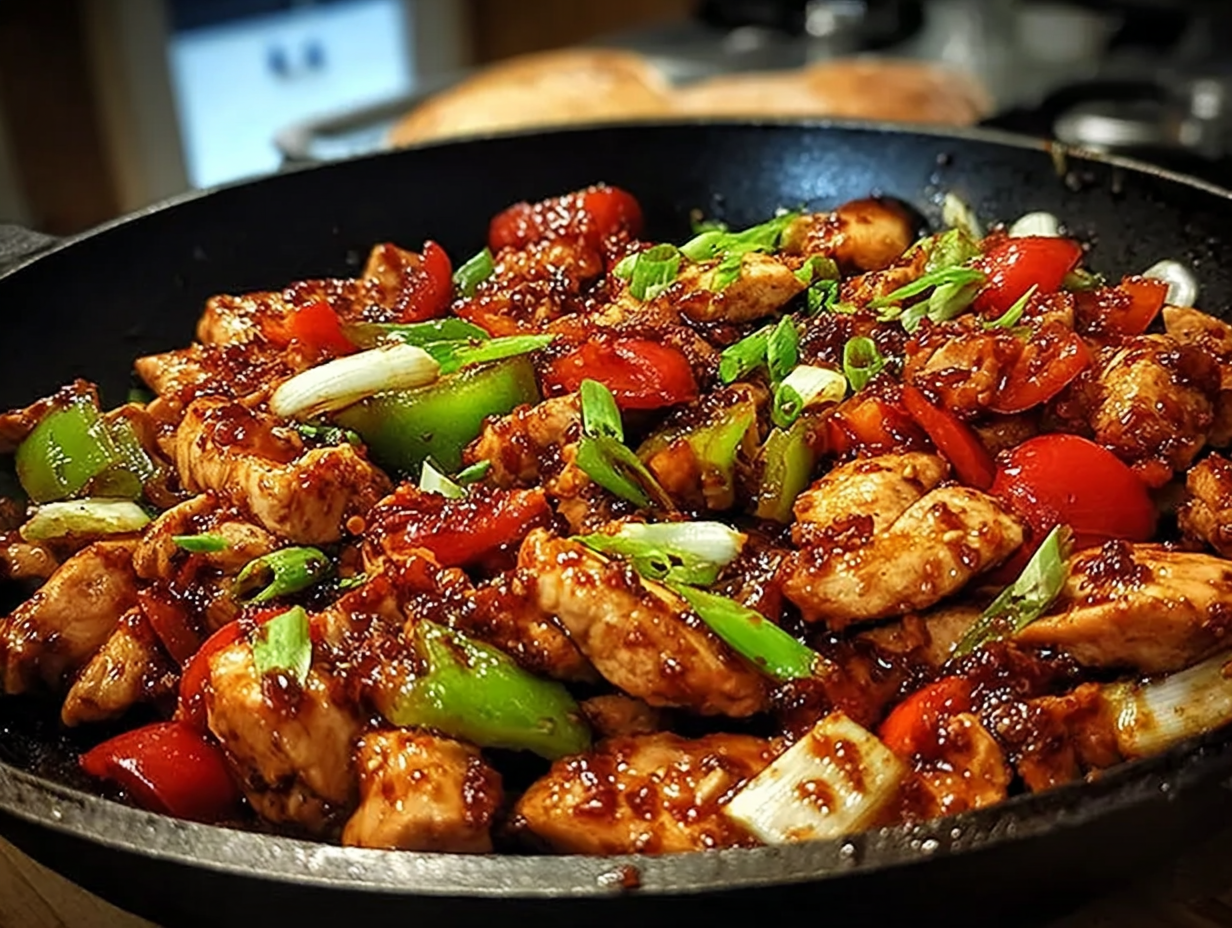
What I love most about this recipe is its beautiful complexity that comes from very simple steps. You’re just a few minutes of chopping and one hot skillet away from a meal that feels truly special. The star of the show is gochujang, a fermented Korean chili paste that provides a deep, savory heat that’s unlike any other. Paired with the nuttiness of sesame oil, a touch of honey for sweetness, and the classic saltiness of soy sauce, it creates a sauce that’s downright addictive. It’s the kind of Spicy Chicken Food that satisfies a craving you didn’t even know you had. So when you want a meal that’s fast, flavorful, and genuinely exciting, this is the one.
Ingredients
- 1 lb chicken breast, sliced into thin bite-sized pieces
- 2 tablespoons vegetable oil
- 1 large bell pepper (any color), thinly sliced
- 1 medium onion, thinly sliced
- 2 cloves garlic, minced
- 1 tablespoon fresh ginger, minced
- 3 tablespoons gochujang (Korean chili paste)
- 2 tablespoons soy sauce
- 1 tablespoon sesame oil
- 1 tablespoon honey
- Sesame seeds, for garnish
- 2-3 green onions, thinly sliced, for garnish
Instructions
- Heat the vegetable oil in a large skillet or wok over medium-high heat. You want the pan to be hot before you add anything to get a good sear.
- Add the sliced chicken to the hot skillet in a single layer. Cook for 5-7 minutes, stirring occasionally, until it’s browned on all sides and cooked through. Try not to overcrowd the pan; cook in batches if necessary.
- Add the minced garlic and ginger to the skillet with the chicken. Sauté for about one minute until you can smell their wonderful aroma.
- Toss in the sliced bell pepper and onion. Continue to stir-fry for another 3-4 minutes. You’re looking for the vegetables to become tender but still have a slight crunch.
- While the vegetables are cooking, prepare your Spicy Stir Fry Sauce Recipe. In a small bowl, whisk together the gochujang, soy sauce, sesame oil, and honey until smooth.
- Pour the sauce over the chicken and vegetables in the skillet. Stir everything together continuously to ensure every single piece is coated in that glorious red sauce.
- Continue to cook for 2-3 minutes, allowing the sauce to bubble and thicken slightly, clinging to the ingredients.
- Remove from the heat. Serve immediately, garnished generously with sesame seeds and sliced green onions.
Tips & Tricks for the Perfect Korean Spicy Chicken Stir Fry
Making a truly great stir-fry is all about heat and speed. One of the biggest mistakes home cooks make is having a pan that isn’t hot enough. When you add the chicken, you want to hear an immediate, aggressive sizzle. This is how you get that delicious browning, or Maillard reaction, which creates a huge amount of flavor. If the pan is too cool, the chicken will just steam in its own juices, resulting in a pale and rubbery texture. So, be patient and let that skillet get properly hot before you start. This single step will elevate your dish from a simple mix of ingredients to what feels like the Best Asian Chicken you’ve ever made at home. It’s a simple change that makes a world of difference and is key to achieving that restaurant-quality result we all crave.
Another key to success is preparation. The French call it ‘mise en place,’ which simply means “everything in its place.” A stir-fry cooks so quickly that you won’t have time to chop vegetables or mix your sauce once you start. Before you even think about turning on the stove, have your chicken sliced, your vegetables chopped, your garlic and ginger minced, and your sauce ingredients measured and mixed. This keeps the cooking process calm and controlled, preventing you from frantically searching for an ingredient while what’s in the pan overcooks. This organized approach is especially crucial for any Spicy Stir Fry, where the high heat can burn ingredients like garlic in a matter of seconds. A little prep work upfront makes the entire cooking process smooth, fast, and much more enjoyable.
Why is my chicken tough?
Tough chicken in a stir-fry is usually caused by one of two things: slicing it too thick or overcooking. Be sure to slice the chicken breast thinly and against the grain. This shortens the muscle fibers, making them more tender. More importantly, don’t cook it to death! Chicken continues to cook even after you take it off the direct heat. Cook it until it’s just opaque and browned, then proceed with the recipe. It will finish cooking in the final step when you add the sauce, ensuring it stays juicy and tender.
Substitutions & Variations
This recipe is incredibly forgiving and easy to adapt to your tastes or what you have in the fridge. While chicken breast is lean and quick-cooking, chicken thighs are also a fantastic option, offering a richer flavor and more moisture. Just be sure to trim any excess fat and slice them thinly. Beyond poultry, this spicy gochujang sauce is a dream with thinly sliced pork loin or flank steak. For a vegetarian or vegan alternative, firm or extra-firm tofu is the perfect choice. Press the tofu well to remove excess water, cube it, and pan-fry it until golden brown and crispy before adding it to the stir-fry with the vegetables. This versatility makes it one of my favorite Spicy Asian Recipes to keep in my back pocket for any occasion.
Don’t feel limited by the bell peppers and onions! This is a great “clean out the crisper” kind of meal. Broccoli florets, sliced mushrooms, zucchini, snap peas, or carrots all work beautifully. Just be mindful of cooking times; add harder vegetables like broccoli and carrots a minute or two before softer ones like zucchini or mushrooms. You can also play with the sauce. For a deeper, funkier flavor, add a teaspoon of doenjang (Korean soybean paste). If you want more heat without more sweetness, a dash of gochugaru (Korean chili flakes) will do the trick. Customizing the components is how you take a basic recipe for Asian Spiced Chicken and truly make it your own.
Can I make this dish less spicy?
Absolutely. The spiciness of gochujang brands can vary, but you have full control over the heat level. To make a milder version, simply reduce the amount of gochujang from three tablespoons to one or one-and-a-half. You might want to add a little extra soy sauce or a pinch of salt to compensate for the reduced seasoning. Conversely, for the spice lovers, feel free to add an extra tablespoon of gochujang or a sprinkle of gochugaru (Korean chili flakes) for a more intense kick.
Frequently Asked Questions
What is Gochujang and where can I find it?
Gochujang is a staple in Korean cooking. It’s a thick, fermented chili paste made from red chili powder, glutinous rice, fermented soybeans, and salt. It has a unique flavor that is simultaneously spicy, savory, and slightly sweet. You can find it in most large supermarkets in the international aisle, at any Asian grocery store, or online. It typically comes in a red plastic tub and will last for a long time in the refrigerator.
How should I store and reheat leftovers?
Leftovers are fantastic! Store any remaining stir-fry in an airtight container in the refrigerator for up to 3-4 days. To reheat, you can microwave it in short bursts until warm, but for the best texture, I recommend reheating it in a skillet over medium heat. Add a splash of water or chicken broth to loosen the sauce and prevent it from drying out as it warms up.
What should I serve with this Korean Spicy Chicken Stir Fry?
The classic and simplest pairing is a bowl of hot, steamed white rice. The rice provides a perfect neutral base that soaks up all the delicious, spicy sauce. For a lower-carb option, it’s also excellent with quinoa, cauliflower rice, or even served over simple rice noodles. On the side, a quick cucumber salad or some steamed broccoli can provide a nice, cooling contrast to the heat of the dish.
Conclusion
This Korean Spicy Chicken Stir Fry is more than just a recipe; it’s a solution. It’s the answer to the dreaded “what’s for dinner?” question on a busy Tuesday. It’s proof that you don’t need hours or a long list of complicated ingredients to create something truly vibrant and delicious. The sizzle of the chicken hitting the hot pan, the fragrant aroma of garlic and ginger, and the sight of that rich, red sauce coating everything is a genuinely satisfying cooking experience. I hope you give this Spicy Stir Fry a try and that it brings a little bit of delicious excitement to your dinner table. It’s a dish that’s easy to make, hard to forget, and guaranteed to become a new favorite.
Korean Spicy Chicken Stir Fry
Ingredients
Equipment
Method
- Heat the vegetable oil in a large skillet or wok over medium-high heat. You want the pan to be hot before you add anything to get a good sear.
- Add the sliced chicken to the hot skillet in a single layer. Cook for 5-7 minutes, stirring occasionally, until it’s browned on all sides and cooked through. Try not to overcrowd the pan; cook in batches if necessary.
- Add the minced garlic and ginger to the skillet with the chicken. Sauté for about one minute until you can smell their wonderful aroma.
- Toss in the sliced bell pepper and onion. Continue to stir-fry for another 3-4 minutes. You’re looking for the vegetables to become tender but still have a slight crunch.
- While the vegetables are cooking, prepare your Spicy Stir Fry Sauce Recipe. In a small bowl, whisk together the gochujang, soy sauce, sesame oil, and honey until smooth.
- Pour the sauce over the chicken and vegetables in the skillet. Stir everything together continuously to ensure every single piece is coated in that glorious red sauce.
- Continue to cook for 2-3 minutes, allowing the sauce to bubble and thicken slightly, clinging to the ingredients.
- Remove from the heat. Serve immediately, garnished generously with sesame seeds and sliced green onions.