Our Classic German Goulash is a testament to the magic of patient cooking. Unlike its Hungarian cousin, the German version often features a generous amount of onions that melt into the sauce, creating an unparalleled richness and natural sweetness. We lean into warm spices like caraway and marjoram, which beautifully complement the earthy depth of the beef and sweet Hungarian paprika. The result is a velvety, robust stew with melt-in-your-mouth beef, bathed in a sauce so savory and satisfying, you’ll want to sop up every last drop.
This recipe has been perfected over years, ensuring that even a novice cook can achieve a restaurant-quality dish with minimal fuss. While it asks for a few hours of gentle braising, the hands-on time is surprisingly short, allowing you to relax while your oven does all the hard work. Get ready to gather your loved ones around the table for a truly unforgettable feast – whether served over fluffy egg noodles, creamy mashed potatoes, or even simple crusty bread, this goulash promises to be a new family favorite.
Ingredients You’ll Need
- 1½ pounds yellow onions, finely chopped (about 3 large onions)
- 2 tablespoons olive oil, plus more if needed
- 2 pounds beef chuck roast or stew beef, cut into 1 to 1½-inch cubes, patted dry
- ½ medium green bell pepper, finely chopped (about ½ cup)
- 3 cloves garlic, minced
- ½ medium ripe tomato, seeded and diced small (about ⅓ cup)
- 1 teaspoon kosher salt, divided, plus more to taste
- ½ teaspoon freshly ground black pepper
- 2 tablespoons high-quality sweet Hungarian paprika
- 2 teaspoons dried marjoram
- 1 teaspoon caraway seeds, whole
- 2 tablespoons tomato paste
- 2 cups beef broth, low sodium preferred
- ½ cup dry red wine, such as Merlot or Cabernet Sauvignon
- 1 large bay leaf
- ¼ cup fresh parsley, chopped, for garnish
Step-by-Step Instructions
Step 1
Position an oven rack in the center of your oven and preheat to 325°F (160°C). This ensures the oven is at the correct temperature for even braising.
Step 2
In a heavy-bottomed pot or Dutch oven (that’s oven-safe), add 2 tablespoons of olive oil and heat over medium heat. Add the finely chopped 1½ pounds of onions and ½ teaspoon of kosher salt. Cook for 15-20 minutes, stirring occasionally. This step is crucial for developing deep flavor; cook until the onions are very tender, deeply golden, and almost jam-like, ensuring they release their natural sweetness.
Step 3
Carefully transfer the caramelized onions to a separate dish and set aside. Don’t worry about any bits stuck to the bottom of the pot; they will add flavor later.
Step 4
Season the 2 pounds of cubed beef chuck roast or stew beef with the remaining ½ teaspoon of kosher salt and ½ teaspoon of black pepper. Return the Dutch oven to medium-high heat. If needed, add a touch more olive oil. Add the seasoned beef in batches if necessary, ensuring not to overcrowd the pot. Cook for 5-10 minutes, turning occasionally, until all sides of the beef are well browned. Browning the meat creates a rich, complex flavor base.
Step 5
Return the reserved onions to the pot with the browned beef. Stir in the chopped ½ green pepper, diced ½ tomato, minced 3 cloves of garlic, 2 tablespoons of sweet Hungarian paprika, 2 teaspoons of dried marjoram, 1 teaspoon of caraway seeds, and 2 tablespoons of tomato paste. Cook for 2-3 minutes, stirring constantly, to toast the spices and cook out the raw flavor of the tomato paste. Then, pour in the 2 cups of beef broth and ½ cup of dry red wine, scraping up any browned bits from the bottom of the pot (this is called deglazing and adds immense flavor). Add the 1 bay leaf. Bring the mixture to a gentle boil.
Step 6
Once boiling, place the lid on the pot slightly askew, allowing a small gap for steam to escape. This helps to thicken the sauce slightly while retaining moisture. Transfer the pot to the preheated oven and cook for 1½ to 2 hours, or until the beef is incredibly tender and easily pulls apart with a fork. The longer and slower it braises, the more tender and flavorful your goulash will be.
Step 7
Remove the pot from the oven. Discard the bay leaf. Taste and adjust seasoning if necessary. Garnish generously with ¼ cup of fresh chopped parsley. Serve this hearty German goulash hot over traditional spaetzle, buttered egg noodles, creamy mashed potatoes, or steamed potatoes for a truly comforting and delicious meal.
Step 8
Enjoy your homemade German Goulash!.
Chef’s Tips & Variations
**Chef’s Tips & Variations:**
* **Don’t Skimp on Onion Time:** The secret to truly flavorful German goulash lies in properly caramelizing the onions. Don’t rush this step; those deeply golden, sweet onions form the backbone of the sauce’s rich flavor and color. If they start to dry out, add a tablespoon of water to help them along.
* **Quality Paprika Matters:** Invest in good quality sweet Hungarian paprika. It’s the star spice here, providing both color and a nuanced, sweet pepper flavor. Avoid generic paprika if possible.
* **Browning is Key:** Ensure your beef is well-browned on all sides before adding other ingredients. This creates a deep, savory crust (Maillard reaction) that adds incredible depth to the stew. Work in batches if your pot isn’t large enough to prevent overcrowding, which would steam the meat instead of browning it.
* **Let it Rest:** Like many stews, goulash often tastes even better the next day as the flavors meld and deepen. If you have the time, make it a day ahead.
**Recipe Variations:**
* **Add Root Vegetables:** For extra heartiness, consider adding diced carrots, parsnips, or potatoes during the last hour of cooking. They will absorb the rich flavors beautifully.
* **Spice It Up:** If you prefer a little heat, add a pinch of hot Hungarian paprika or a tiny bit of cayenne pepper along with the sweet paprika.
* **Creamy Finish:** For an even richer, creamier sauce, stir in a dollop of sour cream or créme fraîche just before serving (do not boil after adding).
**Make-Ahead & Storage:**
* **Make-Ahead:** Goulash is an excellent make-ahead meal. Prepare it fully, let it cool, and refrigerate for up to 3-4 days. Reheat gently on the stovetop or in the oven until warmed through.
* **Freezing:** This goulash freezes beautifully. Once cooled, transfer to airtight containers and freeze for up to 3 months. Thaw overnight in the refrigerator and reheat gently.
Frequently Asked Questions
Can I use a different cut of beef for goulash?
Yes, beef chuck roast or stew beef are ideal because they become incredibly tender with long, slow cooking. You could also use beef round or brisket, but ensure it’s cut into appropriate 1-1½ inch cubes.
My goulash sauce isn’t thick enough. How can I fix it?
If your goulash sauce is too thin, you can simmer it on the stovetop with the lid off for a bit longer to reduce it. Alternatively, mix 1 tablespoon of cornstarch with 1 tablespoon of cold water, then stir it into the simmering goulash and cook for a few minutes until thickened.
Can I make this goulash without wine?
Absolutely! If you prefer not to use red wine, you can substitute the ½ cup of dry red wine with an equal amount of beef broth or even a dark, non-alcoholic beer for a similar depth of flavor.
How can I get the onions so tender and flavorful?
The key is patience! Cooking the onions over medium heat for 15-20 minutes, stirring occasionally, allows them to slowly caramelize and release their natural sugars. Don’t rush this step, as it builds the foundational flavor for the entire dish.
What are the best serving suggestions for German Goulash?
German Goulash is traditionally served with starchy sides that can soak up the rich sauce. Classic choices include spaetzle, buttered egg noodles, mashed potatoes, or even crusty bread. A simple green salad on the side can also offer a nice contrast.
Is German Goulash very spicy?
No, traditional German Goulash typically uses sweet Hungarian paprika, which provides a rich, warm flavor without much heat. While some variations might include a pinch of hot paprika, this recipe focuses on comforting savory notes rather than intense spice.
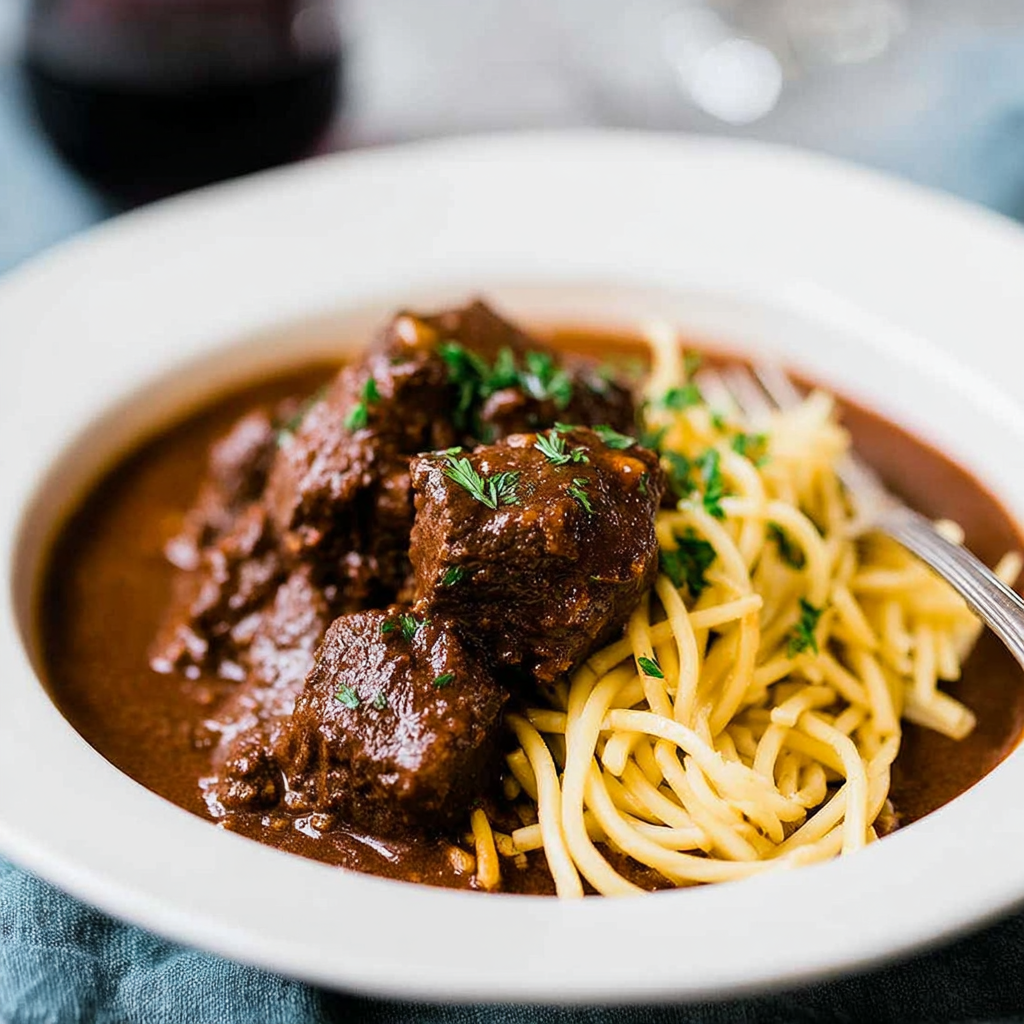
Hearty German Goulash: A Comforting Classic for Your Table
Ingredients
Method
- Position an oven rack in the center of your oven and preheat to 325°F (160°C). This ensures the oven is at the correct temperature for even braising.
- In a heavy-bottomed pot or Dutch oven (that’s oven-safe), add 2 tablespoons of olive oil and heat over medium heat. Add the finely chopped 1½ pounds of onions and ½ teaspoon of kosher salt. Cook for 15-20 minutes, stirring occasionally. This step is crucial for developing deep flavor; cook until the onions are very tender, deeply golden, and almost jam-like, ensuring they release their natural sweetness.
- Carefully transfer the caramelized onions to a separate dish and set aside. Don’t worry about any bits stuck to the bottom of the pot; they will add flavor later.
- Season the 2 pounds of cubed beef chuck roast or stew beef with the remaining ½ teaspoon of kosher salt and ½ teaspoon of black pepper. Return the Dutch oven to medium-high heat. If needed, add a touch more olive oil. Add the seasoned beef in batches if necessary, ensuring not to overcrowd the pot. Cook for 5-10 minutes, turning occasionally, until all sides of the beef are well browned. Browning the meat creates a rich, complex flavor base.
- Return the reserved onions to the pot with the browned beef. Stir in the chopped ½ green pepper, diced ½ tomato, minced 3 cloves of garlic, 2 tablespoons of sweet Hungarian paprika, 2 teaspoons of dried marjoram, 1 teaspoon of caraway seeds, and 2 tablespoons of tomato paste. Cook for 2-3 minutes, stirring constantly, to toast the spices and cook out the raw flavor of the tomato paste. Then, pour in the 2 cups of beef broth and ½ cup of dry red wine, scraping up any browned bits from the bottom of the pot (this is called deglazing and adds immense flavor). Add the 1 bay leaf. Bring the mixture to a gentle boil.
- Once boiling, place the lid on the pot slightly askew, allowing a small gap for steam to escape. This helps to thicken the sauce slightly while retaining moisture. Transfer the pot to the preheated oven and cook for 1½ to 2 hours, or until the beef is incredibly tender and easily pulls apart with a fork. The longer and slower it braises, the more tender and flavorful your goulash will be.
- Remove the pot from the oven. Discard the bay leaf. Taste and adjust seasoning if necessary. Garnish generously with ¼ cup of fresh chopped parsley. Serve this hearty German goulash hot over traditional spaetzle, buttered egg noodles, creamy mashed potatoes, or steamed potatoes for a truly comforting and delicious meal.
- Enjoy your homemade German Goulash!.