There are certain smells that transport you right back to childhood, and for me, the scent of sizzling German Potato Pancakes is one of them. I can still picture my Oma’s hands, dusted with flour, expertly grating potatoes and onions over a large ceramic bowl. The kitchen would fill with a sharp, earthy aroma, soon followed by the glorious sizzle of batter hitting a hot, well-oiled cast-iron skillet. Those afternoons were pure magic, ending with a plate of the most perfectly golden, impossibly crispy potato pancakes, served simply with a dollop of cold applesauce. It wasn’t just a meal; it was a feeling of warmth, comfort, and unwavering love, all packed into one humble dish. This recipe is my attempt to capture that same magic for you.
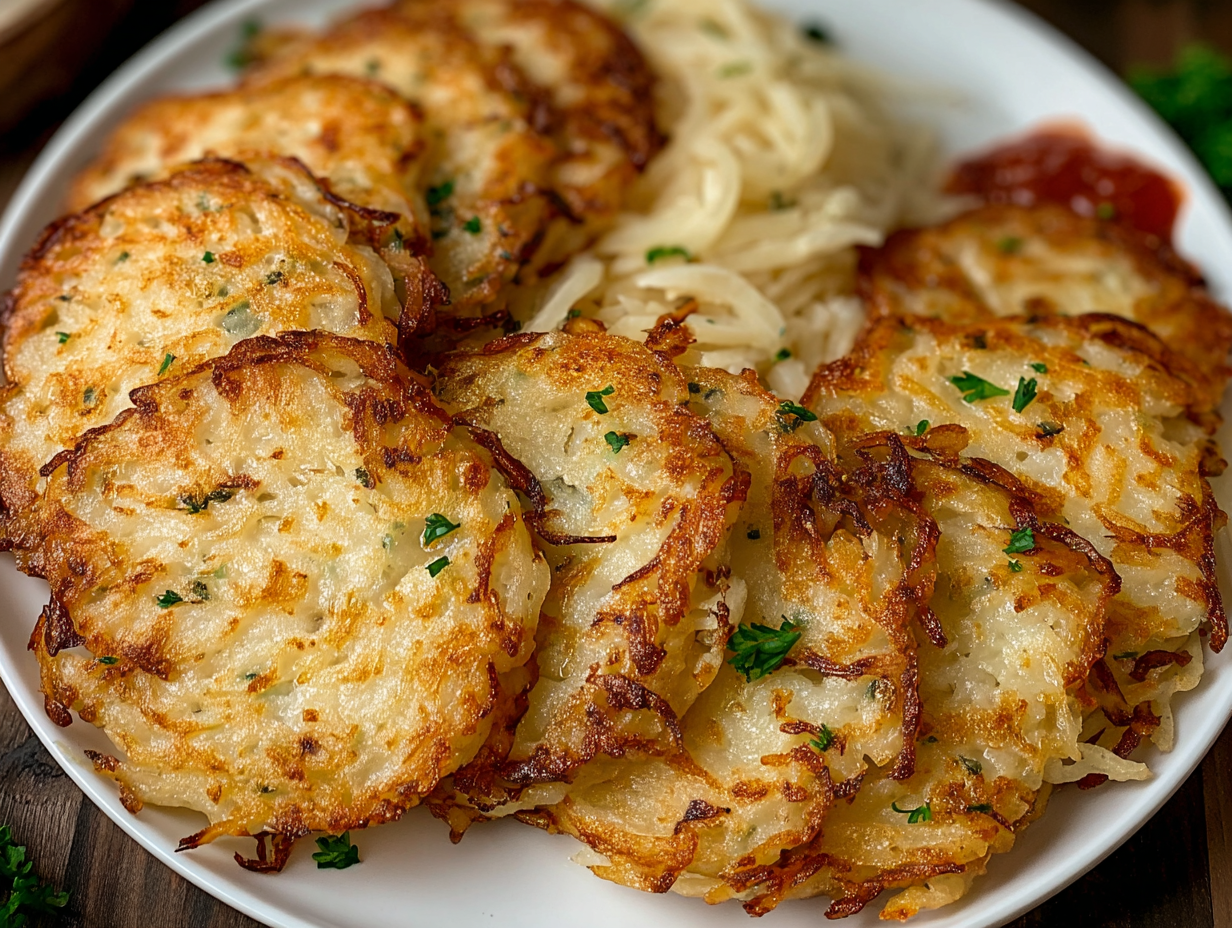
This isn’t just any recipe; it’s a blueprint for creating incredibly flavorful, authentic Kartoffelpuffer (that’s what we called them!). What makes this Traditional German Potato Pancakes recipe so special is its simplicity and the focus on technique. We’ll walk through the essential steps to achieve that signature contrast: a shatteringly crisp exterior giving way to a soft, tender, and savory interior. Forget soggy, greasy pancakes forever. We’ll cover the secrets, from choosing the right potatoes to the game-changing double-fry method that guarantees an unforgettable crunch. This dish stands as one of those Easy Popular Recipes for a reason—it requires minimal ingredients but delivers maximum comfort and flavor, making it a perfect Breakfast Recipe Vegetarian option or a hearty snack any time of day.
Ingredients for German Potato Pancakes
The beauty of a traditional recipe lies in its simplicity. You don’t need a long list of fancy items to create authentic German Potato Pancakes. The magic comes from using the right kind of basic ingredients and preparing them correctly. The star of the show is, of course, the potato. For this recipe, you absolutely want to use a high-starch potato. Russets are my go-to and are widely available. Their low moisture and high starch content are the key to getting a fluffy interior and a wonderfully crispy exterior. Avoid waxy potatoes like red or new potatoes, as they hold too much water and can lead to a denser, gummier pancake. The onion adds a crucial layer of savory, aromatic flavor that balances the starchiness of the potatoes. A simple yellow onion works perfectly, providing a mild sweetness when cooked.
The rest of the ingredients act as the supporting cast, binding the mixture together and seasoning it perfectly. A large egg is essential for holding the grated potatoes and onions together, preventing your pancakes from falling apart in the pan. All-purpose flour also helps with binding, absorbing some of the excess moisture that the potatoes release. You don’t need much; just a few tablespoons are enough to create a cohesive batter. Salt and pepper are there for seasoning, but the salt also plays a scientific role, helping to draw out even more water from the grated potatoes before you mix in the other ingredients. Finally, a neutral oil with a high smoke point, like vegetable or canola oil, is necessary for frying. You want an oil that won’t burn over medium-high heat and won’t impart a strong flavor, letting the potato and onion shine.
- 1 lb Russet potatoes (about 2-3 medium potatoes)
- 1 small yellow onion
- 1 large egg, lightly beaten
- 3 tbsp all-purpose flour
- 1 tsp salt, divided
- 1/2 tsp black pepper
- Vegetable or canola oil, for frying
Instructions for the Perfect German Potato Pancake Recipe
Now, let’s get into the heart of How To Make German Potato Pancakes. The process is straightforward, but paying attention to a few key details will make all the difference between good and great pancakes. First, prepare your potatoes and onion. After peeling the potatoes, use the large holes of a box grater to shred them into a large bowl. Do the same with the onion. Some people prefer to grate the onion on the finer side to have it melt more seamlessly into the pancake, which is a great trick if you’re not a fan of larger onion pieces. The moment you grate potatoes, they begin to oxidize and turn a grayish color. To work efficiently, have all your other ingredients and tools ready to go before you start grating. This will help you assemble the batter quickly and get it into the pan before it discolors too much.
The next step is arguably the most critical for achieving crispy perfection: removing excess moisture. The grated potato and onion mixture will have a lot of water. You need to get rid of as much as possible. You can do this by placing the mixture in a clean kitchen towel or a few layers of cheesecloth and wringing it out with all your might over the sink. You’ll be amazed at how much liquid comes out! Once your mixture is significantly drier, transfer it back to the bowl and mix in the beaten egg, flour, salt, and pepper. Stir until everything is just combined into a thick, shaggy batter. Don’t overmix, as that can develop the gluten in the flour and make the pancakes tough. Now you’re ready to fry. Heat a generous layer of oil in a skillet over medium-high heat. The oil is ready when a small shred of potato sizzles immediately. Drop spoonfuls of the batter into the hot oil, flattening them gently with the back of the spoon. Don’t overcrowd the pan, as this will lower the oil temperature and result in greasy pancakes. Fry for 3-4 minutes per side, until they are a deep golden brown. The final secret is a quick double fry. Let them rest on a wire rack for a few minutes, then return them to the hot oil for about 30-60 seconds per side. This makes them unbelievably crispy.
- Grate Potatoes and Onion: Wash and peel the potatoes. Using the large holes on a box grater, grate the potatoes and the onion into a large mixing bowl.
- Squeeze Out Liquid: Transfer the grated mixture to a clean kitchen towel or cheesecloth. Gather the ends and twist tightly, wringing out as much excess liquid as possible over the sink. This step is crucial for crispy pancakes.
- Mix the Batter: Return the dry potato mixture to the bowl. Add the lightly beaten egg, all-purpose flour, salt, and black pepper. Use a fork or your hands to mix everything together until just combined.
- Heat the Oil: Pour about 1/4 inch of vegetable oil into a large, heavy-bottomed skillet and heat over medium-high heat. The oil is ready when a small drop of batter sizzles instantly.
- Fry the Pancakes: Scoop about 2-3 tablespoons of the batter per pancake into the hot oil. Use the back of a spoon to flatten each mound slightly. Fry in batches, being careful not to overcrowd the pan. Cook for 3-4 minutes per side, until deep golden brown and crispy.
- Drain and Double-Fry (Optional): Transfer the cooked pancakes to a wire rack or a paper towel-lined plate to drain. For an extra-crispy finish, return the pancakes to the hot oil for a second fry, about 30-60 seconds per side, until they are even crispier.
- Serve Immediately: Serve the German Potato Pancakes hot from the skillet with your favorite toppings, such as applesauce or sour cream.
Tips & Tricks for the Best German Potato Pancakes
Over the years, I’ve learned that a few small details can elevate this simple German Potato Pancake Recipe from good to unforgettable. The most important tip, which I can’t stress enough, is managing the moisture content. Squeezing the liquid out of the grated potatoes and onions is not a step to be skipped or rushed. Water is the enemy of crispiness. A potato ricer is another excellent tool for this job if you have one; it can exert a lot of pressure and extract a surprising amount of liquid. Another common issue is the batter turning gray or brown from oxidation. While it doesn’t affect the taste, it’s not visually appealing. The best way to combat this is to work quickly. Have everything measured and ready before you start grating. If you do need to pause, you can submerge the grated potatoes in cold water to prevent browning, but you’ll need to be extra diligent about drying them thoroughly before mixing the batter.
The Secret to Extra-Crispy Pancakes
My Oma’s secret weapon, and the one I swear by, is the double fry. It might seem like an extra step, but it is the single best way to guarantee a perfectly crisp, never-soggy potato pancake. The first fry cooks the pancake through and creates the initial golden crust. Letting it rest for a few minutes allows some of the internal steam to escape. When you put it back into the hot oil for the second, shorter fry, the surface moisture evaporates rapidly, creating an incredibly crunchy and durable crust that holds up beautifully, even after sitting for a few minutes. Another key factor is the oil temperature. If the oil isn’t hot enough, the pancakes will absorb it like a sponge and turn out greasy. If it’s too hot, the outside will burn before the inside is cooked. A steady medium-high heat is your sweet spot. Test it with a tiny bit of batter before you start your first batch.
Why did my potato pancakes get soggy?
This is the most common question, and the answer almost always comes down to two things: moisture and temperature. If you didn’t squeeze enough water out of the potato-onion mixture, that excess steam will get trapped inside as it cooks, turning the pancake soft from the inside out. Secondly, if your oil temperature is too low or if you overcrowd the pan (which causes the oil temperature to drop), the pancakes will boil and steam in the oil rather than fry. Ensure your oil is shimmering and hot, and always fry in batches with plenty of space around each pancake. Finally, never stack the finished pancakes on a plate. Instead, lay them in a single layer on a wire rack to allow air to circulate, keeping them crisp.
Substitutions & Variations for Potato Cakes German Style
While the classic recipe for these Potato Cakes German style is fantastic on its own, it’s also wonderfully adaptable. One of the most common needs is a gluten-free option. You can easily substitute the all-purpose flour with a good quality gluten-free all-purpose blend. I’ve also had success using chickpea flour, which adds a nice nutty flavor, or simple cornstarch, which helps with crisping. The amount should remain the same. If you don’t have Russet potatoes, other starchy varieties like Idaho or King Edward potatoes are excellent alternatives. You can even get creative and try a blend of potatoes and other root vegetables. A mix of half potato and half parsnip or celeriac adds a lovely, earthy sweetness that completely changes the character of the dish in a delightful way.
Flavor Variations
For those who enjoy a bit more flair, feel free to add fresh herbs or spices to the batter. Finely chopped chives, parsley, or a bit of fresh dill can brighten up the flavor profile beautifully. For a touch of warmth, a pinch of nutmeg or smoked paprika can be stirred into the batter. If you want to lean into a more savory direction, you can add a tablespoon of grated Parmesan cheese or a bit of crumbled, cooked bacon directly into the mixture before frying. These additions make the pancakes a more substantial dish, perfect for a light lunch or dinner alongside a simple green salad.
Can I make Oven Potato Pancakes?
Yes, for a healthier, hands-off alternative, you can make Oven Potato Pancakes. While they won’t achieve the same deep, uniform crispiness as their fried counterparts, they can still be delicious. To do this, preheat your oven to 425°F (220°C). Line a baking sheet with parchment paper and brush it generously with oil. Form the potato mixture into patties and place them on the baking sheet, then brush the tops with more oil. Bake for 15-20 minutes, then carefully flip them and bake for another 10-15 minutes, or until golden brown and cooked through. They will be more like roasted potato cakes, with a softer texture but still plenty of flavor.
Frequently Asked Questions about German Potato Pancakes
Why are my potato pancakes falling apart?
If your pancakes are crumbling in the pan, it’s usually due to a weak binding agent. First, ensure you squeezed out enough water; a batter that’s too wet will struggle to hold its shape. Second, your pancake might not have enough binder. This recipe uses one large egg and three tablespoons of flour for one pound of potatoes, which should be sufficient. If your mixture still feels loose, you can add another tablespoon of flour to help it hold together. Also, be gentle when you flip them. Wait until a deep golden-brown crust has formed on the first side before attempting to turn it over, as this crust provides structure.
Can I use a food processor to grate the potatoes?
You certainly can, and it will save you a lot of time and scraped knuckles! Use the shredding disc attachment on your food processor for both the potatoes and the onion. The texture will be slightly different—more uniform and a bit finer than hand-grating—but the results are still excellent. The most important thing is that you still must squeeze out all the excess moisture after processing them.
What are the best toppings for German Potato Pancakes?
The classic and most traditional toppings are applesauce (Apfelmus) and sour cream. The cool, sweet applesauce and the tangy, creamy sour cream provide a perfect contrast to the hot, savory, and crispy pancakes. However, don’t feel limited! For a sweet twist, a sprinkle of cinnamon sugar is delicious. For a savory meal, try them with smoked salmon and a dollop of crème fraîche, or serve them alongside a hearty bratwurst and some grainy mustard.
Conclusion
There is something profoundly satisfying about turning a few humble potatoes and an onion into a plate of crispy, golden German Potato Pancakes. It’s a recipe that connects us to a rich culinary tradition, a taste of German comfort that feels both nostalgic and timeless. Every sizzle in the pan is a reminder that the best food is often the simplest, made with care and a few time-honored techniques. This German Potato Pancake Recipe is more than just a set of instructions; it’s an invitation to slow down, get your hands a little dirty, and create something truly delicious from scratch.
I hope this recipe brings as much joy and warmth to your kitchen as it does to mine. Whether you serve them for a special weekend breakfast, as a comforting appetizer, or a simple dinner, these pancakes are sure to be a hit. So gather your ingredients, grate with gusto, and get ready to enjoy one of the most beloved and Easy Popular Recipes from German cuisine. Don’t forget to share your creations and let me know what you think!
Traditional German Potato Pancakes
Ingredients
Equipment
Method
- Grate Potatoes and Onion: Wash and peel the potatoes. Using the large holes on a box grater, grate the potatoes and the onion into a large mixing bowl.
- Squeeze Out Liquid: Transfer the grated mixture to a clean kitchen towel or cheesecloth. Gather the ends and twist tightly, wringing out as much excess liquid as possible over the sink. This step is crucial for crispy pancakes.
- Mix the Batter: Return the dry potato mixture to the bowl. Add the lightly beaten egg, all-purpose flour, salt, and black pepper. Use a fork or your hands to mix everything together until just combined.
- Heat the Oil: Pour about 1/4 inch of vegetable oil into a large, heavy-bottomed skillet and heat over medium-high heat. The oil is ready when a small drop of batter sizzles instantly.
- Fry the Pancakes: Scoop about 2-3 tablespoons of the batter per pancake into the hot oil. Use the back of a spoon to flatten each mound slightly. Fry in batches, being careful not to overcrowd the pan. Cook for 3-4 minutes per side, until deep golden brown and crispy.
- Drain and Double-Fry (Optional): Transfer the cooked pancakes to a wire rack or a paper towel-lined plate to drain. For an extra-crispy finish, return the pancakes to the hot oil for a second fry, about 30-60 seconds per side, until they are even crispier.
- Serve Immediately: Serve the German Potato Pancakes hot from the skillet with your favorite toppings, such as applesauce or sour cream.