One of the best things about a classic recipe like this is how easily it can be adapted to your tastes or what you have in your pantry. This easy homemade pancakes recipe is a fantastic base for getting creative. Don’t be afraid to play around with different flours, milks, or add-ins to make it your own. These simple swaps can introduce new flavors and textures, turning a familiar breakfast into something new and exciting. Whether you’re accommodating a dietary need or just looking to experiment, the structure of this recipe is very forgiving and welcomes a bit of personalization. Just remember to keep the wet-to-dry ingredient ratios relatively consistent to maintain the integrity of the pancake.
Delicious Add-Ins
This is where you can really have some fun. After you’ve mixed the batter, you can gently fold in a variety of ingredients to add bursts of flavor and texture. Here are a few of our family’s favorites:
- Fresh or Frozen Berries: Blueberries are a classic for a reason! You can also use chopped strawberries or raspberries. Gently fold them into the batter at the very end.
- Chocolate Chips: For a more decadent treat, add a handful of semi-sweet or milk chocolate chips.
- Spices: A teaspoon of cinnamon or a pinch of nutmeg can add a wonderful warmth to the batter.
- Citrus Zest: A little lemon or orange zest can brighten up the flavor profile beautifully.
Dietary Swaps and Ingredient Alternatives
If you need to adjust the recipe for dietary reasons, it’s quite simple. For a dairy-free version, you can easily substitute the milk with a non-dairy alternative like almond milk, soy milk, or oat milk. Use a neutral-flavored oil like canola or melted coconut oil in place of the butter. For a bit more nutritional value, you can experiment with the flour. Try replacing half of the all-purpose flour with whole wheat flour for a heartier, nuttier flavor and added fiber. This will result in slightly denser but still delicious and light fluffy pancakes. Just be mindful that whole wheat flour absorbs more liquid, so you might need to add an extra splash of milk to get the right consistency.
Frequently Asked Questions About Easy Homemade Pancakes
Can I make the pancake batter ahead of time?
While you can technically mix the batter and store it in the refrigerator overnight, I find that you get the best results when you make it fresh. The baking powder is most active right after it’s mixed with the wet ingredients. If it sits for too long, it can lose some of its leavening power, which can lead to flatter pancakes. If you want to save time in the morning, I recommend a different approach: mix all the dry ingredients in a bowl or jar the night before. Then, in the morning, all you have to do is whisk the wet ingredients, combine the two, and you’re ready to cook. This gives you the convenience of a mix with the freshness of a homemade batter.
How do I know exactly when to flip my pancakes?
This is the question every new pancake-maker asks! It can feel a bit like a guessing game at first, but there are clear visual cues to look for. Don’t rely on a timer alone, as stove temperatures can vary. Instead, watch the surface of the pancake. You’ll start to see small bubbles appear and pop. Once the bubbles are popping across the entire surface and the edges of the pancake look dry and slightly set, it’s ready. You can use your spatula to take a quick peek at the underside; it should be a beautiful golden brown. Flip with confidence! The second side will cook much faster, usually only needing about a minute or two.
What’s the best way to store and reheat leftover pancakes?
Leftover pancakes are a fantastic treat! To store them, let the pancakes cool completely to room temperature first. This prevents them from getting soggy. Then, you can stack them in an airtight container in the refrigerator for up to 3 days. For longer storage, they freeze wonderfully. Place sheets of wax paper or parchment paper between each pancake to prevent them from sticking together, then put the stack in a freezer-safe bag or container. They can be frozen for up to 2 months. To reheat, you can pop them in the toaster or a toaster oven for a minute or two until they are warm and slightly crispy. You can also warm them in the microwave, but the toaster method gives a much better texture.
Conclusion
There you have it—a simple, no-fail recipe for truly wonderful, easy homemade pancakes. This isn’t just about mixing flour and eggs; it’s about creating a moment of warmth and connection, whether it’s a slow Saturday morning or a special breakfast-for-dinner treat. The beauty of this recipe lies in its simplicity and the consistently delicious results. It proves that you don’t need a box mix to whip up a stack of perfectly light fluffy pancakes. I hope this recipe becomes a cherished part of your breakfast rotation, just as it has in my home. So go ahead, gather your ingredients, and enjoy the simple, satisfying process of making something wonderful from scratch.
Easy Homemade Pancakes
Ingredients
Equipment
Method
- In a large bowl, whisk together the dry ingredients: all-purpose flour, baking powder, sugar, and salt. Breaking up any clumps now helps ensure a smooth final batter.
- In a separate medium bowl, whisk the egg, then add the milk, melted butter, and vanilla extract. Whisk until everything is just combined.
- Pour the wet ingredients into the bowl with the dry ingredients. Gently fold them together with a spatula or wooden spoon until just combined. It’s really important not to overmix! A few lumps in the batter are perfectly fine and are the secret to tender, light fluffy pancakes. Let the batter rest for 5 minutes.
- Heat a nonstick skillet or griddle over medium heat. A little butter or oil can help with the first pancake, but a good nonstick pan often doesn’t need it.
- Scoop about 1/3 cup of the pancake batter onto the warm skillet. Let it cook for about 2-3 minutes, or until you see bubbles forming on the surface and the edges look set and golden.
- Flip the pancake carefully and cook for another 1-2 minutes on the other side, until it’s golden brown and cooked through.
- Repeat the process with the remaining batter. To keep your finished pancakes warm while you cook the rest, you can place them on a baking sheet in a 200°F (95°C) oven or on a plate covered with a towel.
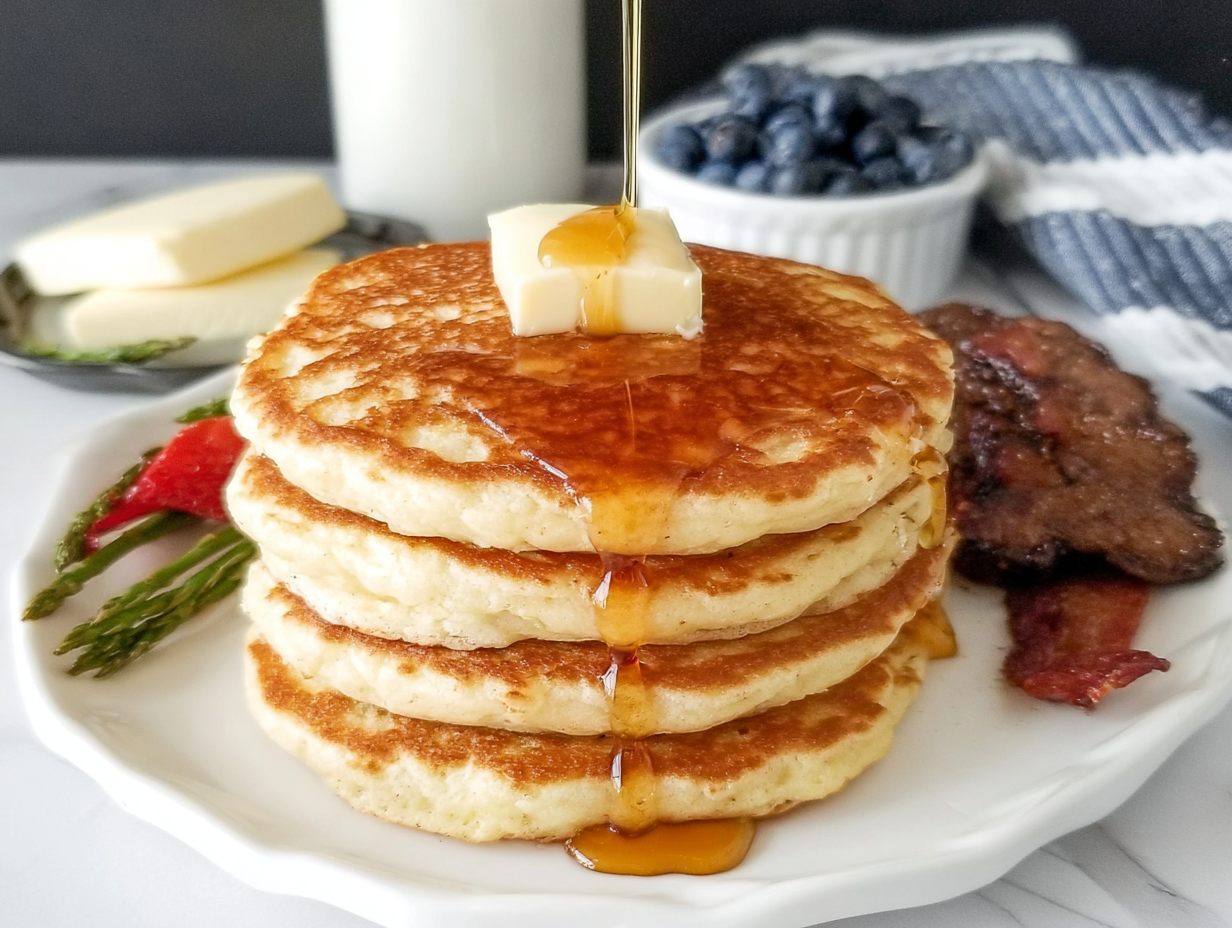
- Serve your warm, easy homemade pancakes immediately with your favorite toppings like butter, maple syrup, and fresh fruit. Enjoy!
Notes
There’s a certain magic to weekend mornings, isn’t there? The world slows down, the coffee brews a little slower, and the day feels full of possibility. For me, nothing captures that feeling quite like the smell and sizzle of making easy homemade pancakes from scratch. Forget the boxed mixes. This recipe is about bringing things back to basics, using simple ingredients you probably already have to create something genuinely comforting and delicious. It’s the kind of breakfast that makes memories, whether you’re flipping them for your kids, sharing a stack with a partner, or just treating yourself to a quiet, cozy meal. It’s more than just food; it’s a ritual, a warm hug on a plate that starts the day off right.
What makes this recipe my absolute go-to is its reliability. It delivers perfectly light fluffy pancakes every single time, without any complicated steps or fussy techniques. The batter comes together in minutes, and the result is a stack of golden, tender pancakes with slightly crisp edges and a pillowy soft interior. They are the perfect canvas for your favorite toppings, from a simple pat of butter and a drizzle of maple syrup to a tumble of fresh berries and a dollop of whipped cream. This is the recipe that will make you break up with the box for good, proving that homemade is not only better but just as easy. It’s a simple joy, and one I’m so excited to share with you.
Ingredients You’ll Need
- 1 1/4 cup All-Purpose Flour
- 2 tsp Baking Powder
- 2 tbsp White Sugar
- 1/8 tsp Salt
- 1 cup Milk
- 2 tbsp Butter, melted
- 1 large Egg
- 1/4 tsp Vanilla Extract
How to Make Easy Homemade Pancakes
- In a large bowl, whisk together the dry ingredients: all-purpose flour, baking powder, sugar, and salt. Breaking up any clumps now helps ensure a smooth final batter.
- In a separate medium bowl, whisk the egg, then add the milk, melted butter, and vanilla extract. Whisk until everything is just combined.
- Pour the wet ingredients into the bowl with the dry ingredients. Gently fold them together with a spatula or wooden spoon until just combined. It’s really important not to overmix! A few lumps in the batter are perfectly fine and are the secret to tender, light fluffy pancakes. Let the batter rest for 5 minutes.
- Heat a nonstick skillet or griddle over medium heat. A little butter or oil can help with the first pancake, but a good nonstick pan often doesn’t need it.
- Scoop about 1/3 cup of the pancake batter onto the warm skillet. Let it cook for about 2-3 minutes, or until you see bubbles forming on the surface and the edges look set and golden.
- Flip the pancake carefully and cook for another 1-2 minutes on the other side, until it’s golden brown and cooked through.
- Repeat the process with the remaining batter. To keep your finished pancakes warm while you cook the rest, you can place them on a baking sheet in a 200°F (95°C) oven or on a plate covered with a towel.
- Serve your warm, easy homemade pancakes immediately with your favorite toppings like butter, maple syrup, and fresh fruit. Enjoy!
Tips & Tricks for the Best Easy Homemade Pancakes
Making truly great pancakes is an art, but it’s one that’s easy to master with a few key insights. Over the years, I’ve learned that the little things make the biggest difference between a decent pancake and a spectacular one. It often comes down to two things: temperature and technique. Get those right, and you’re on your way to a perfect breakfast. Rushing the process is the most common mistake. Letting the batter rest for a few minutes allows the gluten to relax and the baking powder to start working its magic, which is a crucial first step toward a fluffy texture. It also helps to have all your ingredients at room temperature, especially the egg and milk, as this allows the batter to mix together more evenly and smoothly.
Don’t Overmix the Batter
This is the golden rule of pancake making. If you remember one thing, let it be this. When you combine the wet and dry ingredients, you’re developing gluten in the flour. A little gluten is good—it gives the pancakes structure. But too much gluten, which comes from overmixing, will make your pancakes tough, dense, and chewy instead of light and airy. The goal is to mix until the flour streaks have just disappeared. Your batter should be lumpy! Seriously, a lumpy batter is a good sign. Those little lumps are pockets of flour that will cook up tenderly. A perfectly smooth, overworked batter will lead to flat, rubbery pancakes. Use a spatula to gently fold the ingredients, stop as soon as they’re combined, and then step away. This single trick will transform your easy homemade pancakes.
Getting the Pan Temperature Right
The perfect pancake has a uniform, golden-brown color. This is achieved with consistent, even heat. A skillet that’s too hot will burn the outside before the inside is cooked, leaving you with a raw, doughy center. A skillet that’s not hot enough will cause the pancake to spread too much, absorb too much fat, and become greasy and pale. The sweet spot is medium heat. A great way to test if your pan is ready is the water drop test. Flick a few drops of water onto the skillet; if they sizzle and dance around before evaporating, the pan is at the perfect temperature. If they evaporate instantly, it’s too hot. If they just sit there and steam, it’s not hot enough. Taking a moment to nail the temperature ensures every single one of your light fluffy pancakes cooks perfectly from edge to center.
FAQ: Why did my pancakes turn out flat?
Flat pancakes are usually the result of one of two things: an overmixed batter or expired baking powder. As we covered, overmixing develops too much gluten, which prevents the pancakes from rising. The other culprit is old baking powder. Baking powder loses its leavening power over time. To test if yours is still active, drop a small spoonful into a bit of hot water. If it fizzes and bubbles enthusiastically, it’s still good to go. If it doesn’t, it’s time for a new container. A fresh leavening agent is essential for getting that beautiful lift.
Substitutions and Variations
One of the best things about a classic recipe like this is how easily it can be adapted to your tastes or what you have in your pantry. This easy homemade pancakes recipe is a fantastic base for getting creative. Don’t be afraid to play around with different flours, milks, or add-ins to make it your own. These simple swaps can introduce new flavors and textures, turning a familiar breakfast into something new and exciting. Whether you’re accommodating a dietary need or just looking to experiment, the structure of this recipe is very forgiving and welcomes a bit of personalization. Just remember to keep the wet-to-dry ingredient ratios relatively consistent to maintain the integrity of the pancake.
Delicious Add-Ins
This is where you can really have some fun. After you’ve mixed the batter, you can gently fold in a variety of ingredients to add bursts of flavor and texture. Here are a few of our family’s favorites:
- Fresh or Frozen Berries: Blueberries are a classic for a reason! You can also use chopped strawberries or raspberries. Gently fold them into the batter at the very end.
- Chocolate Chips: For a more decadent treat, add a handful of semi-sweet or milk chocolate chips.
- Spices: A teaspoon of cinnamon or a pinch of nutmeg can add a wonderful warmth to the batter.
- Citrus Zest: A little lemon or orange zest can brighten up the flavor profile beautifully.
Dietary Swaps and Ingredient Alternatives
If you need to adjust the recipe for dietary reasons, it’s quite simple. For a dairy-free version, you can easily substitute the milk with a non-dairy alternative like almond milk, soy milk, or oat milk. Use a neutral-flavored oil like canola or melted coconut oil in place of the butter. For a bit more nutritional value, you can experiment with the flour. Try replacing half of the all-purpose flour with whole wheat flour for a heartier, nuttier flavor and added fiber. This will result in slightly denser but still delicious and light fluffy pancakes. Just be mindful that whole wheat flour absorbs more liquid, so you might need to add an extra splash of milk to get the right consistency.
Frequently Asked Questions About Easy Homemade Pancakes
Can I make the pancake batter ahead of time?
While you can technically mix the batter and store it in the refrigerator overnight, I find that you get the best results when you make it fresh. The baking powder is most active right after it’s mixed with the wet ingredients. If it sits for too long, it can lose some of its leavening power, which can lead to flatter pancakes. If you want to save time in the morning, I recommend a different approach: mix all the dry ingredients in a bowl or jar the night before. Then, in the morning, all you have to do is whisk the wet ingredients, combine the two, and you’re ready to cook. This gives you the convenience of a mix with the freshness of a homemade batter.
How do I know exactly when to flip my pancakes?
This is the question every new pancake-maker asks! It can feel a bit like a guessing game at first, but there are clear visual cues to look for. Don’t rely on a timer alone, as stove temperatures can vary. Instead, watch the surface of the pancake. You’ll start to see small bubbles appear and pop. Once the bubbles are popping across the entire surface and the edges of the pancake look dry and slightly set, it’s ready. You can use your spatula to take a quick peek at the underside; it should be a beautiful golden brown. Flip with confidence! The second side will cook much faster, usually only needing about a minute or two.
What’s the best way to store and reheat leftover pancakes?
Leftover pancakes are a fantastic treat! To store them, let the pancakes cool completely to room temperature first. This prevents them from getting soggy. Then, you can stack them in an airtight container in the refrigerator for up to 3 days. For longer storage, they freeze wonderfully. Place sheets of wax paper or parchment paper between each pancake to prevent them from sticking together, then put the stack in a freezer-safe bag or container. They can be frozen for up to 2 months. To reheat, you can pop them in the toaster or a toaster oven for a minute or two until they are warm and slightly crispy. You can also warm them in the microwave, but the toaster method gives a much better texture.
Conclusion
There you have it—a simple, no-fail recipe for truly wonderful, easy homemade pancakes. This isn’t just about mixing flour and eggs; it’s about creating a moment of warmth and connection, whether it’s a slow Saturday morning or a special breakfast-for-dinner treat. The beauty of this recipe lies in its simplicity and the consistently delicious results. It proves that you don’t need a box mix to whip up a stack of perfectly light fluffy pancakes. I hope this recipe becomes a cherished part of your breakfast rotation, just as it has in my home. So go ahead, gather your ingredients, and enjoy the simple, satisfying process of making something wonderful from scratch.